From Village Green to Public Park: How Shared Play Found Its Place
Explore how village greens and public parks frame shared play, then use a focused visit to notice which features make a local space easier to use.
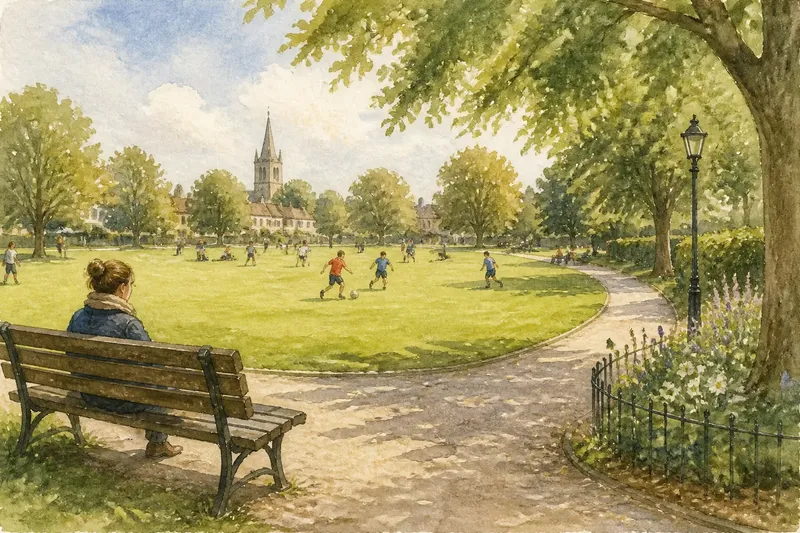
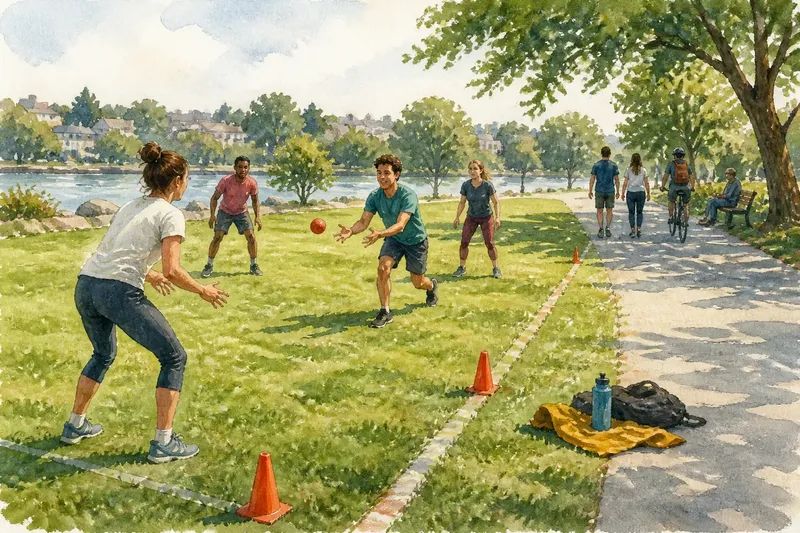
On a village green, a game might begin beside the path while neighbours stopped to watch; in a public park, a marked lawn or a posted rule can shape where that same game fits. The history of village greens and public parks is not one universal change from custom to civic access: places developed differently, and local rights and rules matter.
How did village greens support everyday play?
In some settlements, a village green formed part of the shared landscape, used for gathering, crossing, recreation, or other local purposes. Its role depended on the particular place, including customary practices and any rights recognised there. It was not necessarily a dedicated sports ground, and the label “green” does not tell you who could use it or on what terms.
Repeated use could make a space feel familiar. People might recognise where to pause, meet, or start an informal game without booking a facility. But custom could also be hard for a newcomer to read, and a space that seemed open to some might not feel equally welcoming to everyone. Shared ground did not automatically mean unrestricted or equal access.
What changed with the public park?
Public parks developed in varied ways, so there is no single historical path from village green to park. In broad terms, a park managed as civic open space made questions of public provision and management more visible: who could enter, which activities were allowed, and how different uses should coexist. Local histories and rules determine the details.
Paths, lawns, planted areas, benches, signs, and maintenance can all influence how visitors use a park. A broad lawn may offer room to gather; a path makes a route legible; a sign can clarify a restriction. Like a shared table, the space works for more people when its arrangement leaves room for different uses, though a well-kept landscape may feel inviting to one visitor and overly controlled to another.
The change was not that informal play replaced older customs everywhere. Rather, the management of public space made access and permitted use visible civic questions. Those questions still arise when a park balances quiet, play, events, conservation, and everyday passage.
How can you read a local green or park?
Choose a public space you can reach easily and make several short visits at different times. Note the layout and broad patterns of use, but do not photograph or identify strangers. Treat what you observe as clues about the space, not proof of why any person chose to be there.
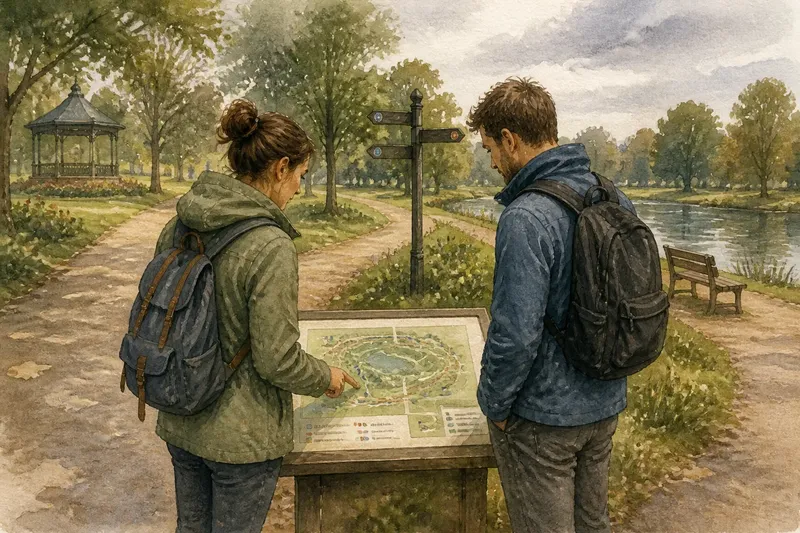
- Check the entrances. If a gate, step, narrow opening, or unclear route makes entry difficult, then note the barrier and look for another accessible entrance; if the approach is clear, then record which route visitors can use.
- Check the paths. If paths connect the entrance to the lawn and seating, then note how they support movement; if they bypass those areas or end abruptly, then consider whether another route would help before assuming visitors prefer not to stop.
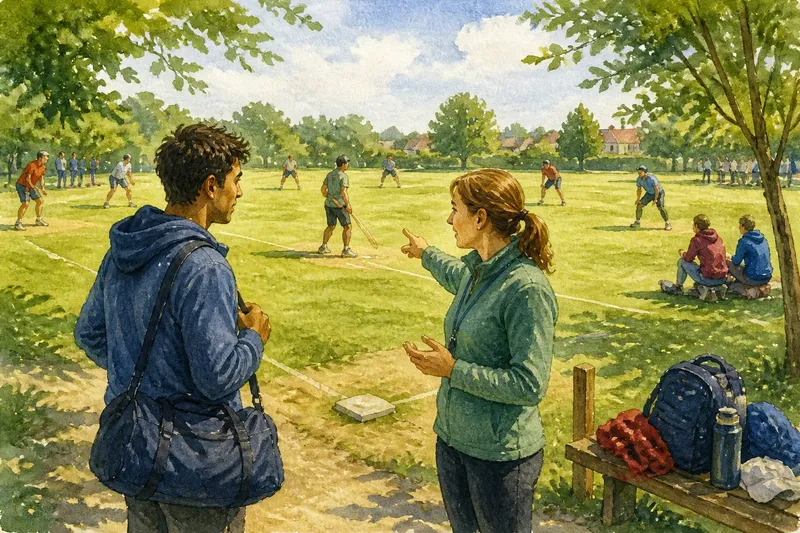
- Check the open ground. If signs or markings specify a use, then follow that guidance; if the lawn is unmarked, then note whether its position and surroundings make gathering or informal play seem practical.
- Check the seating. If benches face a path or view rather than the activity area, then note that distinction; if seating faces the lawn, then consider whether it gives visitors a place to watch or rest nearby.
- Check the boundaries. If fences, planted edges, or signs limit access, then look for the stated reason and follow local rules; if an edge is open, then note how easily people can move between areas.
- Check the space at another time. If the mix of walking, sitting, meeting, or play changes, then record the time and conditions; if it remains similar, then note that pattern without treating one visit as a complete picture.
Say you visit a small park with a wide lawn, benches along one side, and a path running around the edge. On your first visit, you note the open ground and the perimeter route; on a later visit, you check the signs, see that none sets aside the lawn for a particular activity, and notice that the benches face the path rather than the grass. Your resulting description can distinguish the lawn as a place for movement or gathering from the benches as a place to rest, while leaving open the question of why any visitor chooses one or the other.
What questions help explain a park’s social character?
Why might an open lawn remain quiet?
Open ground does not automatically feel usable. Seating, shade, exposure, nearby routes, signs, or local rules may affect whether people choose to stop or play.
Do paths make a park more welcoming?
Paths can make movement easier and show visitors how to cross a space. Their placement matters: a route around an activity area may separate through-traffic from play, while a route across it may make the lawn feel more like a corridor.
Can informal play share space with quieter uses?
Different activities may coexist when there is room to move around one another and expectations are clear. If a conflict arises, consider crowding, layout, and posted rules before treating one group as out of place.
What should you do if a sign is unclear?
Check whether the council or park manager provides further information, and follow posted guidance in the meantime. If a rule affects access or permitted activity and remains unclear, ask the responsible authority.
What does shared space ask of its visitors?
A public park is not simply a larger village green. Its local history, rules, upkeep, layout, and everyday habits shape what public access means in practice. A careful visit can help you notice those conditions without turning other people’s recreation into a spectacle.
Next time you visit a local green or park, choose one feature to examine: a bench facing away from the lawn, a narrow entrance, or a path that skirts open ground. Ask what that feature makes easier and what it may make harder. The village green and public park remain useful ways to think about shared play, but the most reliable clues are local: the rules, the design, and the routes people can actually use.