How to Join a Group Activity Without Learning Every Custom First
Learn how to join a group activity with one focused question, a quick check of the organiser’s directions and a clear next move that respects the group.
To join a group activity, ask about the next useful action instead of trying to learn every local custom first. At a casual game, walking group or dance session, a question such as “Where should I join?” gives the organiser a chance to point you towards a suitable place.
You do not need to arrive knowing how the group handles every turn, bag or piece of equipment. Focus on the detail that affects what you should do now, then pick up ordinary preferences as you take part.
How do you join a group activity without knowing its customs?
Start by working out what you need to decide: whether to join now, where to stand or what to bring. Ask the person organising the activity a short question tied to that choice. A clear answer is more useful than a long explanation of rules you may not need.
Think of joining like using a shared kitchen: you can ask where the clean cups are without learning everyone’s preferred cupboard arrangement. The aim is to make a considerate start, not to copy every habit of the regulars.
Keep safety and courtesy in view. If an activity is under way, do not enter its active space or take equipment without checking with the organiser. If an instruction concerns a route, equipment or another person’s safety, ask the responsible person rather than guessing.
What should you ask before taking part?
Choose a question that makes the next decision easy to answer. For example, at a casual rounders game you could ask, “Is there a place for another fielder?” At a community walk, try, “Can I join the group here?” For a turn-taking game, “Who goes next?” may be enough.
If the reply leaves one immediate point unclear, ask a single follow-up: “Would you like me to wait here or join that line?” Then act on the answer. You are not required to resolve every possible uncertainty before taking part.
What should you check before you choose your next move?
- Is play active? If a ball, turn or performance is under way, stay clear of the active area and ask the organiser at the next pause; if the activity has stopped, ask where to join.
- Is someone organising the session? If a host, volunteer or equipment lead is giving directions, ask them; if nobody is clearly responsible, ask an engaged participant who appears familiar with the activity.
- Did you hear the instruction? If you heard it clearly, follow that direction; if not, ask the person to repeat or show you rather than guessing.
- Does the answer identify a place or role? If it does, go there and check that you understood; if it does not, ask whether to wait, watch or join another part of the activity.
- Does the custom affect safety or access? If it does, get guidance from the organiser before proceeding; if it is only a preference such as where people leave coats, ask where your belongings can go without treating the preference as a barrier to joining.
- Is the group ready to include someone new? If the organiser offers a place or a time to join, take that option; if there is no opening, ask when to check back or decide to watch or leave.
How might a first visit work in practice?
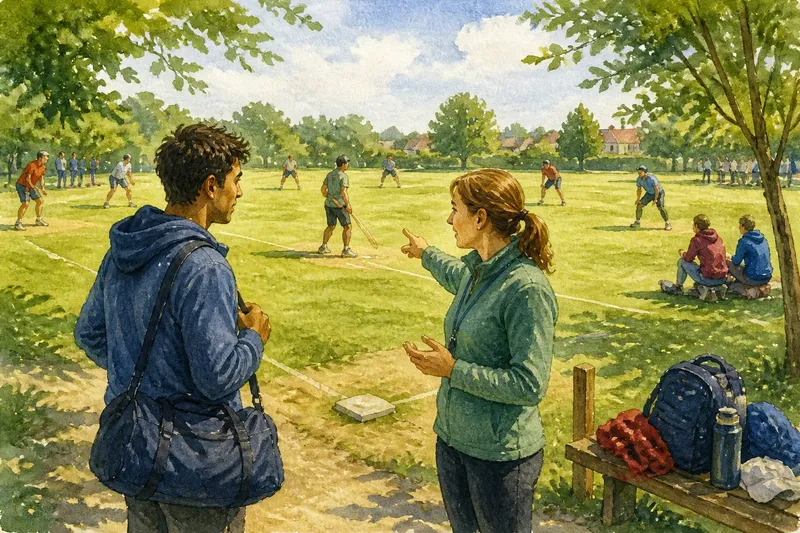
Imagine a hypothetical neighbourhood games afternoon. Sam arrives while a casual rounders game is in progress. Sam does not know how teams are chosen or where bags go, so stays outside the playing area and waits until the ball is out of play.
Sam asks an organiser, “Is there a place for another fielder, or should I wait for the next game?” The organiser says there is room and points to an open position. Sam asks, “Is this the right place?” The organiser confirms and explains that players should call out before crossing the playing area when a batter is ready.
Sam puts a bag beside the other belongings, takes the indicated position and watches how the fielders move. When the organiser signals where to cover, Sam follows the direction and joins the play. The result is a clear place in the activity, while questions about team selection and other customs can wait until they matter.
How can you follow directions without copying every habit?
Use the organiser’s words and gestures to understand the immediate arrangement: where to wait, when a turn begins or which equipment is available. If a gesture is unclear, ask for clarification. Do not assume that one participant’s movement is an invitation for everyone to follow.
Separate coordination from personal style. Directions about turns, routes or shared equipment help the group function; jokes, cheering styles and where regulars prefer to sit may simply reflect their own habits. You can participate without imitating those personal choices.
What if nobody answers or there is no opening?
A delayed reply may mean the organiser is busy or did not hear you. Wait until the activity pauses, then ask once more. If there is still no answer, do not push into the activity: choose whether to watch, look for another organiser or leave.
If you are told that this is not a suitable time to join, accept the direction and ask when the next opportunity might be. You can also ask whether there is another way to take part, such as helping collect equipment. If the group is dismissive or the arrangement does not suit you, choosing a different session is reasonable.
What do newcomers often ask about joining a group activity?
What is the best first question?
Ask about the next decision you need to make: “Where should I join?” or “Is there room for another person?” This gives the organiser a practical point to answer.
How long should you watch before asking?
Watch long enough to tell whether the activity is under way and who appears to be organising it. Then ask at a pause rather than waiting to understand every detail from observation alone.
What if the organiser says to wait?
Follow the direction and ask when to check back or join the next turn. If there is no clear time, decide whether you would rather watch or move on.
Do you need to know every custom before joining?
No. Ask about customs that affect your next action, especially directions concerning safety, access or shared equipment. Learn ordinary preferences as they come up.
How can you make another visit easier?
After taking part, remember only details that will help with a future visit: who organises the session, where newcomers meet or whether people bring their own equipment. If you enjoyed it, ask when the group meets again and whether there is anything particular to bring.
When you hesitate next time, identify the decision in front of you and ask the smallest useful question. That answer may tell you to join, wait for a turn or choose another session; any of those is clearer than trying to infer every custom before you speak.