A First Afternoon at a Local Match: What to Notice Between Plays
Learn how to watch a local match between plays by following tactical resets, player roles and venue cues, so the action makes more sense as you watch.
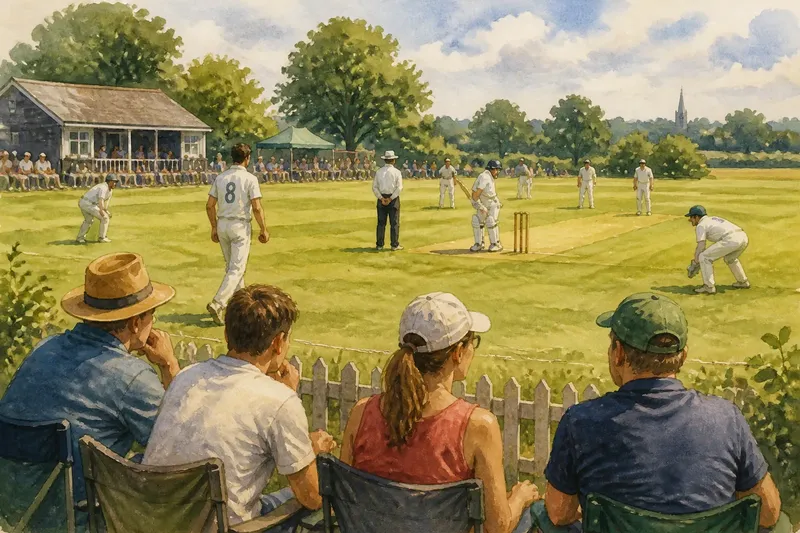
Watching a local match between plays can reveal how one phase sets up the next. At a community cricket ground, for instance, a bowler’s walk back, the fielders’ adjustments and the batter’s preparation all tell you something about the coming delivery.
You do not need to know every rule to follow those changes. Choose a place with a view of the playing area and its edge, then watch how players, officials and spectators respond to the same moments.
How do pauses shape the next phase?
Notice what starts a pause and what ends it. A whistle, a ball leaving play or an official’s decision may stop the action; players returning to positions, an exchanged signal or a change in stance may show that it is about to resume.
Compare different kinds of stoppage. During a boundary decision, players may wait for an official’s signal. At a planned interval, they may leave the playing area while spectators head towards seats or refreshments. The contrast helps you distinguish a break within the contest from a pause in the afternoon.
At a cricket match, you might follow the sequence from the bowler turning back to the fielders settling and the batter resetting their stance. Each delivery has its own rhythm, but repeated actions make it easier to see when attention is shifting from the previous play to the next one.
What can players away from the action tell you?
The player with the ball is not always the only one shaping the next phase. Watch teammates move into space, cover a position or turn towards the developing play. Their adjustments can show where the team expects the action to go, even if you cannot name the tactic.
Choose one player outside the centre of the action and follow their position through a short passage. Notice when they move, when they hold their ground and what changes just before play shifts their way. This gives you a useful thread to follow without trying to track everyone at once.
On the sideline, substitutes may stretch, pass a ball or respond to a coach’s signal. Those movements belong to the match’s preparation, but they are distinct from the live contest. Keep your attention on how their activity changes as play stops and restarts.
How can crowd reactions help you read the match?
Listen for the timing and source of a response. A sudden hush may come just before a key action; applause may follow a play, while a laugh or brief conversation may continue through a routine pause. Notice whether the sound begins near the playing area or among spectators farther away.
These reactions do not explain the rules, and a crowd can respond differently from one match to another. Treat them as cues to look back at the action rather than as a verdict on what happened.
At a local ground, spectators may also shift along a boundary as the play changes direction. Watch how their attention follows the ball and how the group settles again once the immediate passage has ended. It is a little like turning a book towards the light: the scene is the same, but a different angle makes other details easier to see.
What should you look for around the playing area?
The ground helps explain how the match is organised. Notice where the playing surface meets the boundary, benches, paths, gates and equipment. A line of cones may mark a practice area; a designated team space may hold spare kit and water. Watch who uses each area and when, rather than assuming every object has a formal role.
Weather can alter where people look and move. Low sun may turn players away from spectators on one side; wind may carry voices across an open field. If people shift towards shelter, consider whether they are responding to the conditions or following the action.
Keep your view in a place that does not obstruct another spectator or a route used by players and helpers. If an official or player repeatedly needs to pass through a space, choose another position. The aim is not to copy the crowd’s every movement, but to understand how the match and its setting fit together.
Which match cues do newcomers often ask about?
How can I follow a match without knowing the rules?
Pick one recurring cue, such as an official’s signal or players returning to position after a stoppage. Watch what happens immediately before and after it; the pattern can help you follow the rhythm without guessing at a ruling.
What should I watch between cricket deliveries?
Follow the bowler returning to their mark, the fielders adjusting and the batter preparing for the next delivery. These actions show how the players reset, even if you do not know why a particular fielding position was chosen.
How can I tell whether a pause is part of play or an interval?
Look at where players go and whether an official is still managing the stoppage. If players remain near their positions and await a signal, play may resume shortly; if they leave the area and spectators begin moving towards refreshments, it is more likely to be a planned interval.
What does a crowd’s reaction tell me?
A hush, cheer or ripple of applause can point your attention towards a particular moment, but it cannot tell you exactly what a rule means. Look back at the play and watch for the players’ or official’s response.
How does a full passage fit together?
Say you arrive at a community cricket match while a batter is on strike. You see the bowler walk back, two fielders change position and the batter settle before the next delivery; after the play, the fielders return to their places and the bowler resets. By following those visible actions in order, you can recognise the pattern of reset, delivery and repositioning without needing to infer the score or the reason for each fielding choice.
At another point, an official may pause play while a volunteer brings water to a team. Watch who waits, who moves and what signal precedes the restart. The sequence shows how the match’s practical work fits around its action, without making every detail part of the contest itself.
How can you choose what to follow?
- Check whether an official has signalled a stoppage; if players are waiting for a decision, watch for the next signal, but if play continues, return your attention to the active passage.
- Check whether one player away from the centre changes position before the action shifts; if the movement repeats, follow that player for the next passage, but if it does not, choose a different role to observe.
- Check whether the crowd’s sound begins near the playing area or farther back; if it starts beside the action, look for the players’ response, but if it starts among spectators, listen for how it spreads.
- Check whether people leave their places during a pause; if players remain on the field, watch for a restart cue, but if they head away and spectators disperse, treat it as an interval and observe the venue’s routines.
- Check whether a path is being used by players or helpers; if they need to pass through, move to another viewing place, but if the route stays clear, remain where you can see without blocking it.
- Check whether wind, glare or shelter changes where spectators look; if the conditions obscure the play, choose a clearer available view, but if you can still see comfortably, stay and watch how the players adapt.
One thread is enough: follow a pause, a player’s movement or the crowd’s response, then switch when your attention wanders. If you are with someone, compare what each of you noticed during the same passage. One person may have tracked a fielder’s adjustment while the other heard the crowd fall quiet.
Watching a local match between plays is a way to read the match’s particular patterns, not a test of how much sport you already know. On your next visit, try following one repeated player movement from pause to restart; it can give you a fresh view of how that team organises its play.